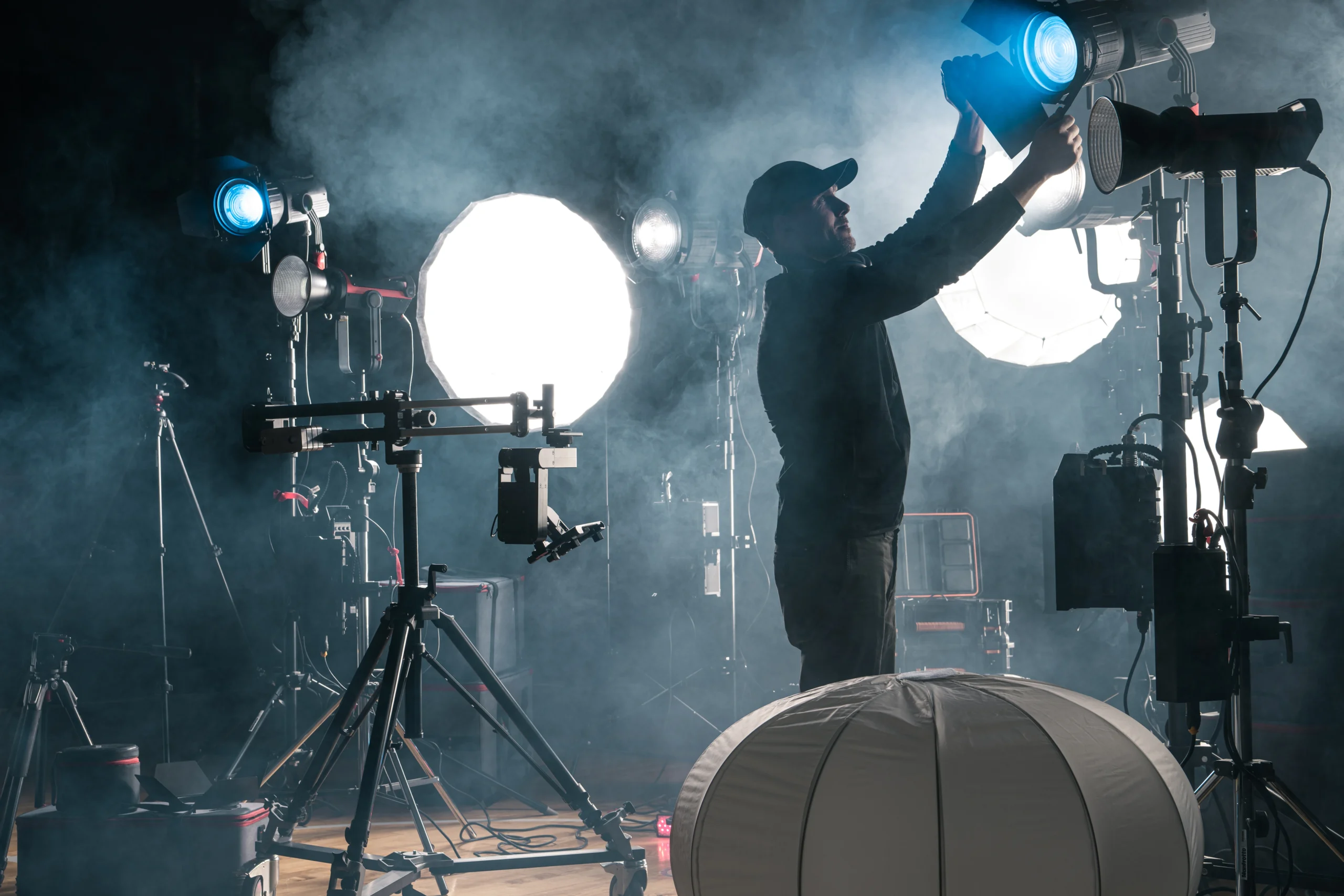
Cinematography that turns imagination into breathtaking visuals.
What is Cinematography?
Cinematography is the art and craft of capturing moving images on film or digital media. It involves the creative and technical decisions that shape the visual storytelling of a film, television show, commercial, or any other visual content.
From framing and composition to lighting, camera movement, lens choice, and color grading, cinematography plays a vital role in setting the mood, tone, and emotion of a story. It’s where technology meets vision — transforming scripts into powerful, visual experiences.
Key Elements of Cinematography
01
Camera Angles
Deciding how each scene is framed and from what perspective.
02
Lighting
Using natural or artificial light to set the mood, tone, and atmosphere.
03
Composition
Arranging elements within the frame to guide the viewer’s attention.
04
Camera Movement
Using pans, tilts, dollies, or handheld shots to add energy or emotion.
05
Lens & Focus Choices
Controlling depth of field and how much of the scene is sharp or blurred
06
Color & Visual Style
Establishing a look that enhances storytelling (warm, cool, saturated, or muted tones).
Types of Cinemotography
Films and video Cinematography
Uses traditional film stock instead of digital cameras.
Digital Cinematography
Captures images with digital cameras instead of film.
Documentary Cinematography
Focused on capturing real-life events, people, and environments.
Drone Cinematography
Uses drones or aircraft-mounted cameras to capture breathtaking overhead views.
Underwater Cinematography
Specialized filming conducted the water surfaces using waterproof equipment.
Live-Action Cinematography
Focuses on shooting real actors and physical environments.
Animation Cinematography
Involves frame-by-frame shooting of objects or characters to create motion.
Experimental Cinematography
Breaks traditional rules to create unique visuals.